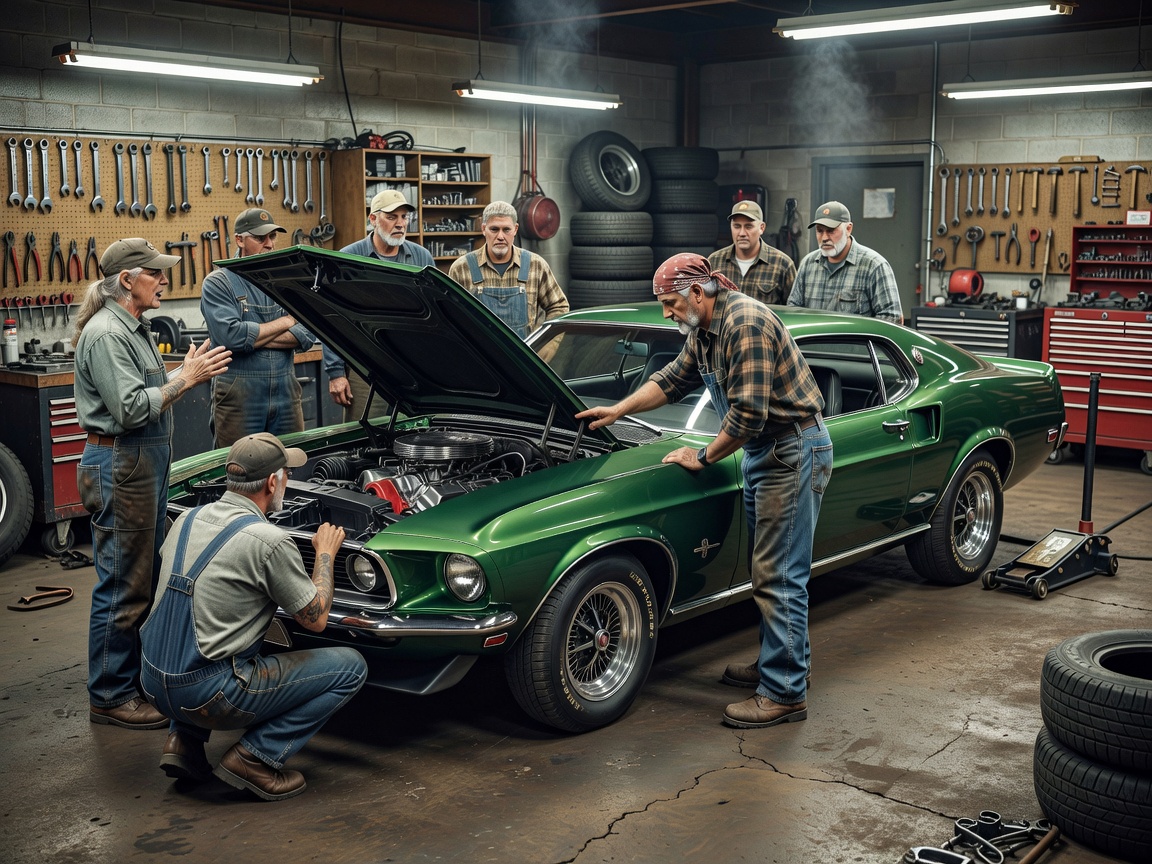
What a community can provide
Classic-car communities take many forms. A formal club may have officers, membership rules and a planned calendar. A marque-focused group may concentrate on one manufacturer or model family. Local owner circles can arrange informal meetings without a public membership structure. Online groups may share technical advice, photographs, parts leads and event notices across long distances.
These formats are not interchangeable. A group built around social drives may not have detailed technical knowledge. A specialist forum can answer a repair question but may not organize in-person meetings. A local network can be useful for workshop referrals yet have limited geographic coverage. Define your need first: technical help, historical research, driving companions, event access or conversation.
Evaluate activity, not claims
Look for recent, specific signs of activity. A dated meeting report, current discussion, recent photographs or a maintained contact channel is more useful than a broad claim that a group is active. Activity can be seasonal. A quiet page during winter does not necessarily mean a group has ended, and frequent online posts do not guarantee regular in-person events.
Check the vehicle focus. Some groups welcome a broad range of historic vehicles; others use clear age, condition or marque criteria. Review the geographic area too. A group based far from your route may still offer online advice, but it may not be practical for a local workshop recommendation. Ask whether events are open to visitors, members only or subject to registration.
Membership and communication
Before joining, read any published membership structure, code of conduct, fee information and privacy notice. Do not assume membership is free or that all activities are open. Ask how applications work, what information is collected and who can see it. If those details are unclear, request them directly before submitting personal information.
Communication may happen through a website, mailing list, social platform or direct contact. Choose channels you can monitor. Keep essential event information in a place you can access while travelling, and confirm changes close to departure using the organizer’s official channel. Do not rely on a reposted screenshot as the final source.
Knowledge exchange and restoration networks
Useful communities share experience while recognizing its limits. A member’s repair method is not automatically suitable for every vehicle. Ask for model year, engine or body specification, previous modifications and source material before applying advice. For safety-critical work, confirm the approach with a qualified technician familiar with the vehicle.
Parts and documentation exchanges need care. Establish whether a part is new, used, reproduced or represented as original. Ask for dimensions, condition photographs and return terms. Treat claims about provenance as claims until supported by records. When sharing a scanned manual or photograph, respect copyright and personal data. An informal network can help locate information, but it cannot guarantee supply, fit or authenticity.
Compare the options
- Formal club: clearer structure and potential calendar; membership rules may limit access.
- Owner group: direct peer knowledge; the level of expertise can vary.
- Online community: broad reach and searchable discussions; advice may lack context.
- Informal meetup: low-friction conversation; schedule and attendance may change.
The advantage of a specialist group is depth. Its limitation can be a narrow vehicle focus or limited local reach. A broader network offers more contacts but may have less model-specific knowledge. Use both where useful, and keep a record of who supplied technical or historical information.
Good for
- New owners seeking experienced peers.
- Restorers comparing parts sources and workshop skills.
- Visitors checking whether a meet welcomes non-members.
- Researchers looking for oral histories and local references.
What to know
- Do not assume current activity, membership numbers or event frequency.
- Verify group details with its current official contact channel.
- Protect private contact details and vehicle-location information.
- Meet in public, agreed places when connecting with unfamiliar contacts.
A short message with a clear request usually works best. State the vehicle type, broad location, question and preferred response channel. Avoid sending sensitive documents before you know who will receive them. For route planning, contact a group early and confirm a visit or meeting rather than arriving without notice. Community access is based on people’s time and boundaries.
Related guides
Read the wider Baltic Classic Cars guide, compare Classic Car Events, or plan a visit using the route planner.