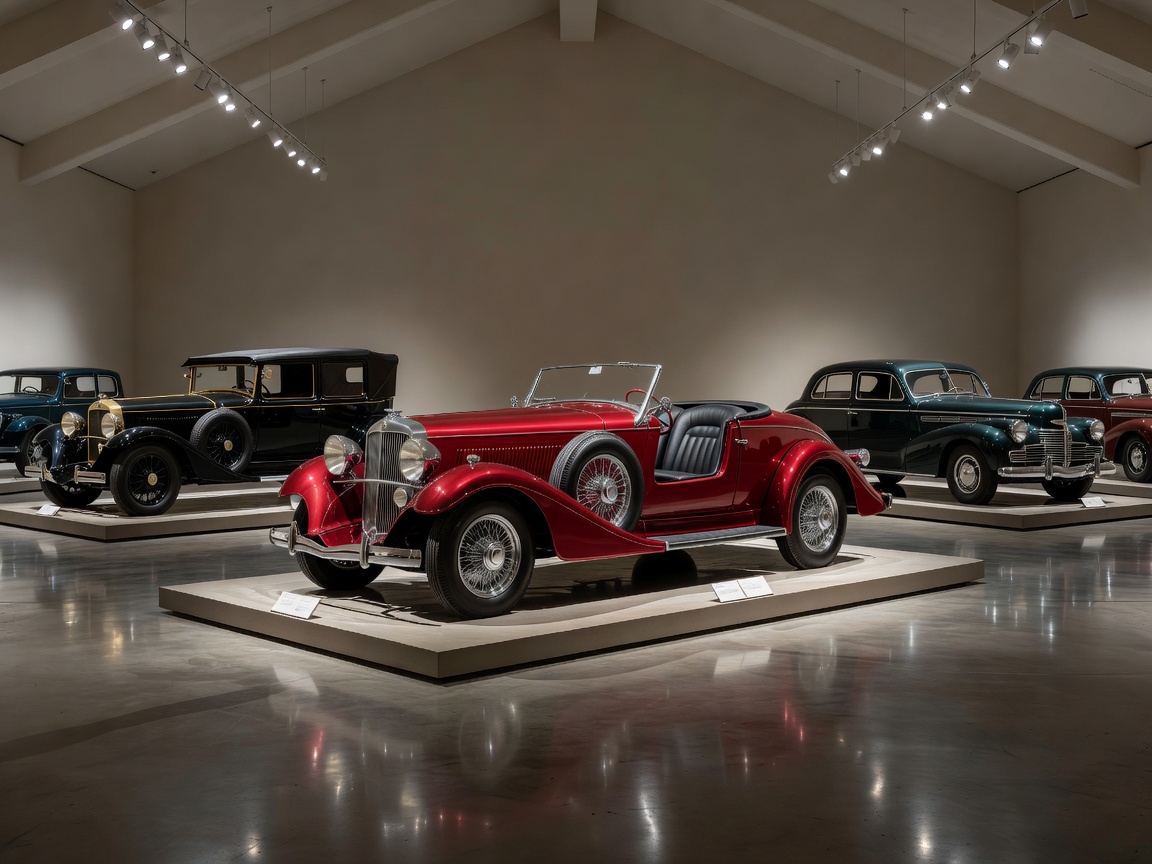
Different collection models
Historic cars may be held by public museums, private owners, foundations, clubs or institutions whose main subject is not motoring. Some collections cover a broad period. Others follow a theme, technical feature, body type, marque or local history. A focused collection can make comparison easier; a broader collection can show how vehicles relate to other aspects of transport and daily life.
Public ownership does not automatically mean unrestricted access. A museum may have specific opening arrangements, temporary closures, photography rules or limited display space. A private collection may not be open to visitors at all. Never infer access from a photograph, directory entry or previous visitor account. Contact the responsible institution or owner and request current visitor details.
Preservation and restoration
Preservation aims to retain surviving material and the evidence carried by an object. Work may stabilize a vehicle, prevent further deterioration and maintain its existing fabric. A preserved car can show age, use and earlier repairs. That condition may be historically important, even if it is not visually uniform.
Restoration changes or replaces material to return a vehicle to a chosen condition. The scope can range from local repairs to extensive reconstruction. Restoration can make a car usable or clarify its intended appearance, but it can also remove evidence if decisions are undocumented. Ask what was retained, what was replaced, which sources guided the work and when the work took place. Neither preservation nor restoration is a simple quality score. The appropriate approach depends on the object and its purpose.
Why documentation matters
Documentation connects a vehicle to its past and makes later interpretation more reliable. Useful records can include registration documents, workshop invoices, photographs, production records, correspondence, manuals and oral histories. Each source has limits. A photograph can show appearance but not establish ownership. A document can contain an error or refer to a different vehicle. Record provenance for the document as well as the car.
Collection catalogues help visitors understand why an object is present. Look for identification details, dates, source notes and explanations of uncertainty. A concise label should distinguish documented facts from interpretation. If a record is incomplete, stating that limitation is more accurate than implying a complete history.
Presentation and interpretation
Display choices shape what visitors notice. A vehicle shown with tools, period documents or related objects can communicate use and maintenance. A platform, barrier or lighting scheme may protect an object while limiting close access. Follow the venue’s rules. Do not touch vehicles, cross barriers or use flash where prohibited. Ask staff before photographing personal or restricted material.
Marque-focused collections are useful for examining design and technical development within a related group. Period collections make comparison across makers easier. Themed collections can connect motoring to work, sport, industry or everyday life. Each format has a limitation: a narrow selection can leave out wider context, while a large theme can make specialist detail harder to follow.
Planning a visit
Before setting a route, confirm that the collection is accessible on the intended date and whether an appointment is required. Ask about current display, entrance arrangements, accessibility, photography and any restrictions. Do not expect every owned vehicle to be on display. Storage, conservation and loan arrangements can affect what visitors see. Avoid publishing an owner’s private location without consent.
For researchers, prepare specific questions. Identify the vehicle or period you need and ask whether catalogues, archives or staff assistance are available. Do not expect a public visit to provide access to private records. Request permission for reproduction and credit images according to the custodian’s terms.
Good for
- Visitors comparing preservation and restoration approaches.
- Researchers seeking object-level documentation and provenance.
- Owners who want to understand collection records.
- Route planners building a day around a confirmed public visit.
What to know
- Private collections are not assumed to be open to the public.
- Collection size, vehicle count and current displays are not stated here.
- Confirm access and visitor conditions with the official custodian.
- Do not treat asking price or visual condition as a measure of historical significance.
A visit offers direct visual evidence, but it is not a substitute for a complete catalogue or specialist assessment. Its advantage is close comparison between objects; its limitation is that display labels may be concise and some records may not be available. Take notes, record source names and follow rules for photography. For a complete trip, leave room for a second stop if a collection is unavailable.
Related guides
Set the wider context with Baltic Classic Cars, find people through Baltic Car Communities, or make a travel plan with the route planner.